
+212772661260
info@triptikum.com
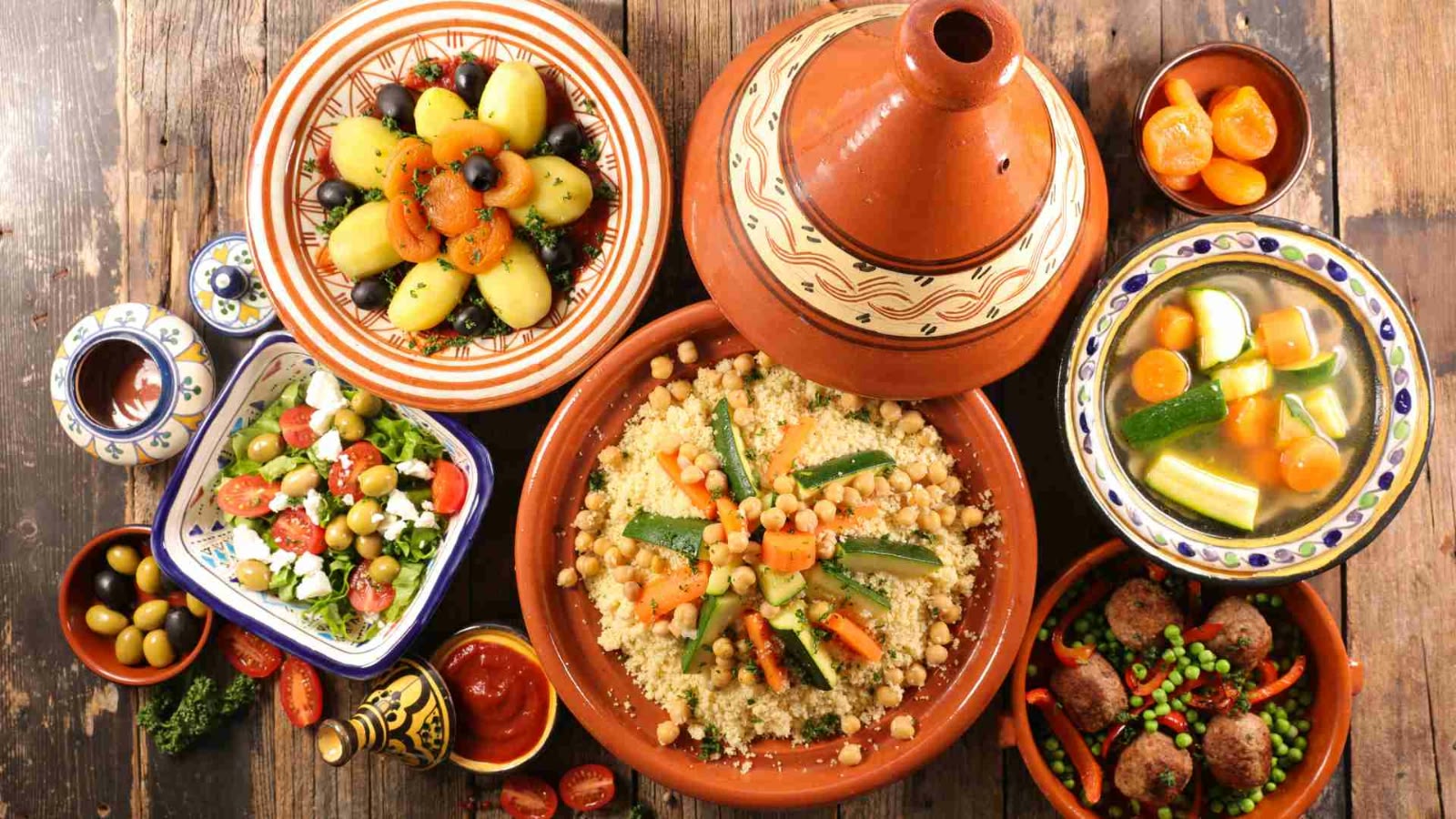
Moroccan food is one of the best ways to discover the country’s culture, history, and traditions. From fragrant tagines and fluffy couscous to fresh salads, Moroccan pastries, and mint tea, food is an important part of everyday life in Morocco.
Whether you are visiting Marrakech, Fes, Chefchaouen, Essaouira, or the Sahara Desert, you will find many traditional Moroccan dishes to try. Some are served in family homes, some in local restaurants, and others can be enjoyed as street food in the busy medinas.
If you are planning a trip to Morocco, this Moroccan food guide will help you discover the dishes you should not miss.
Tagine is probably the most famous Moroccan dish. It takes its name from the traditional clay cooking pot with a cone-shaped lid in which the food is slowly cooked.
There are many types of Moroccan tagine. Popular combinations include chicken with preserved lemon and olives, beef with prunes, lamb with vegetables, and kefta with eggs and tomato sauce.
The slow cooking process allows the meat and vegetables to become tender while absorbing the spices and other ingredients.
Tagine is usually served with Moroccan bread, which is used to scoop up the sauce.
Couscous is another essential Moroccan dish and an important part of Moroccan food culture.
Traditional Moroccan couscous is made from steamed semolina and is usually served with vegetables and meat. Depending on the region and family recipe, you may find couscous with chicken, lamb, beef, or vegetables.
In many Moroccan families, couscous is traditionally prepared for Friday lunch. It is often served in a large communal dish, making it a meal to share with family or friends.
If you want to experience traditional Moroccan cuisine, trying couscous is a must.
Chicken with preserved lemon and green olives is one of the most popular Moroccan tagines.
The combination of tender chicken, salty olives, aromatic spices, and preserved lemon creates a distinctive Moroccan flavor.
It is particularly popular in restaurants and family homes and is an excellent choice for travelers trying Moroccan food for the first time.
Pastilla, also called bastilla, is a traditional Moroccan pastry made with thin layers of pastry filled with meat, eggs, almonds, and spices.
The traditional version is often prepared with pigeon, although chicken pastilla is now more commonly found in restaurants.
The combination of sweet and savory flavors makes pastilla different from many other Moroccan dishes. It is often decorated with powdered sugar and cinnamon.
Pastilla is especially associated with Fes and is a dish worth trying when visiting the city.
Harira is a traditional Moroccan soup that is particularly popular during Ramadan, although it is enjoyed throughout the year.
It is generally prepared with tomatoes, lentils, chickpeas, herbs, spices, and sometimes meat. The soup is rich, filling, and comforting.
During Ramadan, many Moroccan families eat harira when breaking their fast.
For travelers, a bowl of harira with Moroccan bread is an affordable and delicious way to experience local cuisine.
No Moroccan food experience is complete without Moroccan mint tea.
Known by many Moroccans as a symbol of hospitality, mint tea is traditionally prepared with green tea, fresh mint, and sugar.
Tea is often served several times a day, whether at home, in a café, or when welcoming guests.
The traditional way of pouring the tea from a height also creates a light layer of foam in the glass.
When someone offers you Moroccan mint tea, accepting it is often part of the Moroccan hospitality experience.
Bread is an essential part of Moroccan meals.
One of the most common types is khobz, a round, slightly thick Moroccan bread. It is served with tagine, salads, soups, and many other dishes.
Moroccan bread is not only a side dish. It is often used instead of cutlery to pick up food.
You will find fresh bread in bakeries, markets, small shops, and family homes throughout Morocco.
Msemen is a popular Moroccan flatbread made from thin layers of dough folded together and cooked on a hot surface.
It can be eaten for breakfast or as a snack and is often served with honey, butter, cheese, or jam.
You can find msemen in local bakeries, cafés, markets, and street-food stalls.
Another similar Moroccan pancake is baghrir, which has a soft texture and many small holes on its surface. It is commonly served with butter and honey.
Moroccan meals often begin with several small salads.
These can include cooked tomatoes and peppers, carrots, eggplant, beetroot, zucchini, and other vegetables prepared with olive oil, herbs, and spices.
Unlike a typical green salad, Moroccan salads are often cooked and served at room temperature.
Ordering a selection of Moroccan salads is a great way to taste several flavors during one meal.
Kefta is Moroccan seasoned minced meat, usually made with beef or lamb.
One popular way to prepare it is in a tagine with tomatoes, onions, herbs, and eggs.
The dish is rich in flavor but relatively simple, making it a good choice for visitors who want to try Moroccan cuisine without choosing something too unfamiliar.
If you are visiting Marrakech, look for Tanjia Marrakchia.
Unlike a traditional tagine, tanjia is prepared in a special clay container. Meat is combined with spices, preserved lemon, garlic, and other ingredients before being slowly cooked.
Traditionally, the tanjia was associated with the working men of Marrakech and was cooked slowly for several hours.
Today, it remains one of the dishes most closely associated with Marrakech.
Mechoui is traditionally slow-roasted lamb.
The meat becomes very tender and is often served with salt and cumin.
It is especially associated with celebrations, family gatherings, and traditional Moroccan food experiences.
If you enjoy meat, mechoui is one of the dishes worth looking for during your trip.
Morocco has a lively street-food culture, especially in the medinas and busy markets.
Depending on the city, you may find grilled meat, brochettes, sandwiches, msemen, soups, pastries, fresh juices, and other local snacks.
Marrakech's Jemaa el-Fna is particularly famous for its evening food stalls.
Street food can be a great way to experience everyday Moroccan cuisine, but it is important to choose busy stalls with good food turnover and good hygiene practices.
Moroccan pastries are usually sweet, fragrant, and often made with almonds, honey, sesame, or orange blossom water.
Popular examples include chebakia, briouat, and almond-based pastries.
Moroccan sweets are commonly served with mint tea, especially when welcoming guests.
You do not need to order a large quantity. A small selection is enough to discover several different flavors.
Morocco is famous for its fresh fruit, and you will find fresh juices in many markets and cafés.
Orange juice is particularly popular, especially in Marrakech.
Fresh orange juice can be a refreshing drink after walking through a busy medina or visiting historical monuments.
Spices are an important part of Moroccan cooking.
Common ingredients include cumin, ginger, turmeric, cinnamon, paprika, saffron, black pepper, and Moroccan spice mixtures such as ras el hanout.
Moroccan food is generally more aromatic than extremely spicy. The spices are used to build flavor rather than simply create heat.
A visit to a Moroccan souk is also a good opportunity to see the colorful spice displays and learn about local ingredients.
A traditional Moroccan meal is often more than one dish.
You may begin with Moroccan salads and bread, followed by a tagine or another main dish. Fruit, pastries, or mint tea may follow the meal.
Meals are often shared, particularly when dining with family or friends.
Moroccan hospitality is an important part of the experience, so do not be surprised if your Moroccan host encourages you to eat more.
You can enjoy Moroccan food in many different places.
Small local restaurants can offer traditional dishes at reasonable prices. These restaurants are often a good choice if you want to eat where local people eat.
Many riads serve Moroccan meals to their guests. This can be a particularly enjoyable experience because meals may be prepared using traditional family recipes.
Tourist-oriented restaurants can also be a good option, especially when you are unfamiliar with the area or want a comfortable setting.
If your driver or local guide knows a clean and trusted local restaurant, this can be a great way to discover authentic Moroccan food. If there is any doubt about hygiene or food quality, choosing a reputable tourist restaurant is usually the safer option.
Moroccan food uses many spices, but this does not necessarily mean that it is very hot.
Most traditional Moroccan dishes focus on aromatic flavors such as cumin, ginger, cinnamon, turmeric, and paprika.
If you do not like spicy food, simply tell your waiter or cook. Most restaurants can adjust the amount of hot pepper or chili.
If this is your first trip to Morocco, you do not need to try everything at once.
A good starting list would be:
Chicken tagine with preserved lemon and olives
Vegetable or meat couscous
Kefta tagine
Harira soup
Pastilla
Tanjia Marrakchia in Marrakech
Msemen with honey
Moroccan salads
Moroccan pastries
Fresh orange juice
Moroccan mint tea
Try to eat slowly and enjoy the different flavors. Moroccan cuisine is based on combinations of spices, herbs, vegetables, meat, and slow cooking.
If you are eating in a local restaurant, look for places that are busy with local customers. A high turnover of food can be a useful sign that dishes are freshly prepared.
During tours between Moroccan cities, ask your driver or guide for recommendations. A knowledgeable local driver can often suggest a good place for a traditional meal or a simple local snack.
If you have a sensitive stomach or are not used to new foods, start with cooked food and bottled water, and avoid eating food that has been sitting out for a long time.
Moroccan cuisine is much more than tagine and couscous. Every region has its own specialties, ingredients, and traditions.
From the busy food stalls of Marrakech to the traditional dishes of Fes, the seafood of Essaouira, and meals enjoyed in the Sahara, food can become one of the most memorable parts of your Moroccan journey.
The best way to discover Moroccan cuisine is to try different dishes, eat with local people when possible, and be open to new flavors.
So when you visit Morocco, do not only explore its cities, mountains, deserts, and beaches. Take time to taste Morocco too.

Comments