
+212772661260
info@triptikum.com
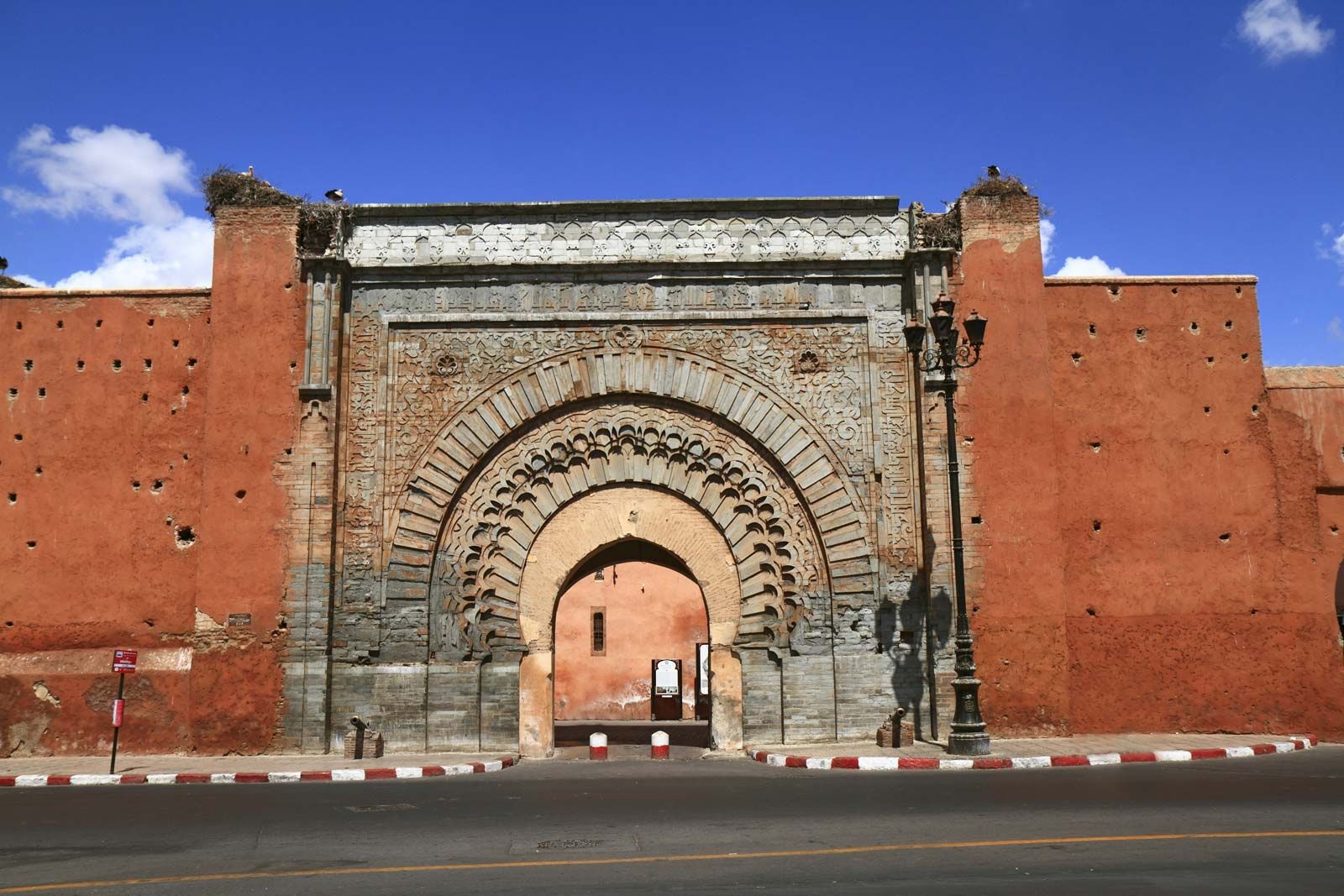
Marrakech is one of the most fascinating cities in Morocco. Famous for its colorful souks, historic palaces, traditional riads, beautiful gardens, and lively Jemaa el-Fna Square, the city attracts millions of visitors who want to experience the heart of Moroccan culture.
However, Marrakech is much more than a tourist destination. Behind its busy streets and famous attractions is a history that goes back almost 1,000 years. Founded in the 11th century, Marrakech became the capital of powerful Moroccan dynasties and an important political, economic, and cultural center connecting North Africa with Al-Andalus.
Today, the historic Medina of Marrakech remains one of the best places to discover the history of Morocco.
Marrakech was founded between 1070 and 1072 by the Almoravid dynasty, which came from the Sahara and established one of the most powerful empires in the western Islamic world. The city was closely associated with the Almoravid ruler Youssef Ibn Tachfine, who made Marrakech an important capital.
The location of Marrakech was strategically important. Situated near the High Atlas Mountains and on important routes linking the Sahara, North Africa, and the Mediterranean world, the city quickly developed into a center for trade and political power.
During the Almoravid period, Marrakech grew rapidly. The rulers built important infrastructure, religious buildings, and urban spaces. The city eventually became the capital of an empire that extended across large parts of North Africa and Al-Andalus.
The Almoravids played a major role in creating the first Marrakech.
They transformed what was previously an area of strategic importance into a major imperial capital. Under their rule, Marrakech became a center of government, religion, trade, and culture.
One of the important surviving examples of Almoravid architecture is the Almoravid Koubba, located near the Ben Youssef area in the Medina. It is considered an important reminder of the early history of Marrakech.
The Almoravids also contributed to the development of water systems, gardens, and the famous palm groves around the city. Water management was essential because Marrakech developed in a relatively dry environment.
The city continued to grow until the arrival of another powerful dynasty: the Almohads.
In 1147, Marrakech was conquered by the Almohad dynasty. Although the Almoravids lost power, Marrakech remained one of the most important cities in the region.
Under the Almohads, the city entered another period of prosperity and development. New districts, defensive walls, gardens, and major religious monuments were created.
The Almohads were responsible for some of the most famous landmarks associated with Marrakech today. Their architectural legacy helped define the appearance of the city and influenced architecture in Morocco and beyond.
The Koutoubia Mosque is one of the most famous symbols of Marrakech.
Built during the Almohad period, its impressive minaret dominates the historic skyline of the city. The minaret is approximately 77 meters high and is considered one of the major monuments of western Islamic architecture.
The name “Koutoubia” is traditionally connected with booksellers and the book trade that developed in the surrounding area.
The Koutoubia Mosque became an architectural model for other important monuments. Its style influenced famous towers and minarets elsewhere in the western Islamic world.
Today, visitors can see the Koutoubia from many places around Marrakech, especially near Jemaa el-Fna Square.
The Almohads also developed the southern part of the city and created the historic Kasbah area.
This fortified district included important buildings and spaces connected with political and military power. Monumental gates, defensive walls, gardens, markets, and religious buildings formed part of the expansion of the imperial city.
The historic walls of Marrakech remain one of the most recognizable features of the city. Their reddish color contributed to Marrakech becoming known as the Red City or Ochre City.
Walking around the Medina today, visitors can still see many parts of these historic ramparts and gates.
In 1269, the Marinids conquered Marrakech, ending the Almohad period.
However, the Marinid rulers preferred to make Fes their main political center. As a result, Marrakech experienced a period of relative decline compared with its earlier role as an imperial capital.
Despite this decline, Marrakech remained an important city because of its location, markets, population, and historic importance.
The city would later experience a major revival under another Moroccan dynasty: the Saadians.
Marrakech returned to major political importance during the Saadian period.
The Saadian rulers restored the city and invested heavily in architecture, religion, education, and royal buildings. This period created some of the most beautiful historical monuments that visitors can still explore today.
One of the greatest examples of Saadian architecture is El Badi Palace.
Built by Sultan Ahmed al-Mansour, the palace was designed to demonstrate the wealth and power of the Saadian dynasty. Its name is often translated as “The Incomparable” or “The Wonderful.”
Although much of the palace is now in ruins, El Badi remains one of the most impressive historical attractions in Marrakech. Visitors can walk through its large courtyards and imagine the magnificent palace that once stood there.
Another important monument from this period is the Saadian Tombs.
The tombs contain the burial places of members of the Saadian dynasty and are famous for their beautiful decoration and historic importance.
Together, the Saadian Tombs and El Badi Palace demonstrate how Marrakech became an important imperial and artistic center once again.
The Ben Youssef Madrasa is another major part of Marrakech's historic heritage. The building seen today reflects later restoration and development, including the Saadian period.
For many years, it was an important center for Islamic education. Its courtyard, carved plaster, traditional tilework, and wooden decoration make it one of the most beautiful examples of Moroccan architecture.
After the decline of the Saadian dynasty, the Alaouite dynasty came to power in Morocco during the 17th century.
The Alaouite rulers continued to rule Morocco, although the political capital changed at different periods.
Marrakech was no longer always the main center of political power, but it remained an important imperial city. Moroccan rulers continued to visit, restore, and develop parts of the city.
Over time, Marrakech preserved its identity as one of Morocco's four famous imperial cities, together with Fes, Meknes, and Rabat.
No discussion about the history of Marrakech is complete without mentioning Jemaa el-Fna.
Today, the square is the social and cultural heart of the Medina. During the day, visitors can find fresh juice stalls, food vendors, musicians, and performers. In the evening, the square becomes even more lively.
Jemaa el-Fna has long been an important public space where people gathered for entertainment, storytelling, music, food, and traditional performances.
UNESCO recognizes the square as an important part of Morocco's intangible cultural heritage, describing it as a remarkable open-air cultural space.
For travelers, visiting Jemaa el-Fna is not simply about taking photographs. It is also an opportunity to experience a living part of Marrakech's history and culture.
In the early 20th century, Morocco came under the French Protectorate.
During this period, Marrakech continued to develop. Unlike the historic Medina, new modern areas were created outside the old city walls.
This helped create the contrast visitors can still see today between the ancient Medina and the newer districts of Marrakech.
The famous Gueliz district, for example, represents a different side of the city, with modern streets, restaurants, shops, hotels, and businesses.
Today, Marrakech is a city where historical architecture and modern development exist side by side.
The Medina is the historic heart of Marrakech.
With its narrow streets, traditional houses, souks, artisan workshops, mosques, palaces, and public spaces, it remains a living historic city rather than simply an open-air museum.
The Medina of Marrakech was added to the UNESCO World Heritage List in 1985. UNESCO recognizes its exceptional historical, architectural, and cultural importance.
When walking through the Medina, visitors can discover:
Historic city walls and gates
The Koutoubia Mosque
Traditional souks
Jemaa el-Fna Square
Ben Youssef Madrasa
The Saadian Tombs
El Badi Palace
Bahia Palace
Traditional riads
Artisan workshops
Historic gardens
This combination of monuments and everyday life makes Marrakech one of the most interesting historic cities in North Africa.
Marrakech is often called the Red City or Ochre City because of the reddish and pinkish color of many of its traditional buildings and city walls.
The use of local earth and traditional materials gave the historic city its distinctive appearance.
The warm colors of Marrakech are now one of the city's strongest visual identities. Visitors can see the famous red and ochre tones in the Medina, city walls, gates, traditional buildings, and surrounding landscape.
The history of Marrakech is closely connected with the history of Morocco itself.
The city served as the capital of powerful dynasties and became a major political, cultural, and economic center. Its influence extended across North Africa and Al-Andalus during important periods of medieval history. UNESCO also notes that Marrakech played a significant role in the development of medieval urban planning in the region.
Even the name of Morocco in several European languages is historically connected with the name Marrakech. The city's historical importance was therefore far greater than that of a regional capital.
One of the most special things about Marrakech is that its history is still visible everywhere.
Visitors do not need to enter a museum to discover the city's past. Walking through the Medina allows travelers to experience historic architecture, traditional crafts, markets, public spaces, and neighborhoods that continue to function as part of daily life.
You can explore an ancient palace in the morning, walk through a centuries-old souk in the afternoon, and watch the energy of Jemaa el-Fna come alive in the evening.
The Medina is a living connection between the past and present.
If you are interested in the history of Marrakech, these places should be included in your itinerary:
The most famous symbol of Marrakech and an important monument from the Almohad period.
One of the most important surviving examples connected with the early Almoravid history of Marrakech.
A beautiful historic center of Islamic learning and Moroccan architecture.
The famous square where history, entertainment, food, music, and local culture come together.
The historic burial place of members of the Saadian dynasty.
The ruins of a magnificent royal palace built during the Saadian period.
A beautiful palace representing the later architectural heritage of Marrakech.
A great way to discover the defensive history and traditional architecture of the Red City.
Marrakech is one of the oldest and most historically important cities in Morocco.
Founded in the 11th century by the Almoravids, the city became the capital of powerful empires and an important center connecting North Africa and Al-Andalus. The Almohads, Saadians, Alaouites, and other rulers all contributed to the development of the city.
Today, Marrakech remains one of the world's great historic destinations.
Its famous monuments, ancient Medina, traditional souks, palaces, gardens, and cultural traditions allow visitors to discover nearly 1,000 years of Moroccan history in one city.
Whether you visit Marrakech for two days, a week, or longer, understanding its history will make your experience more meaningful. Behind every palace, narrow street, gate, and square is a story that helped shape the Morocco we know today.
For travelers interested in history, culture, architecture, and authentic Moroccan experiences, Marrakech is not simply a city to visit—it is a city to discover.

Comments