
+212772661260
info@triptikum.com
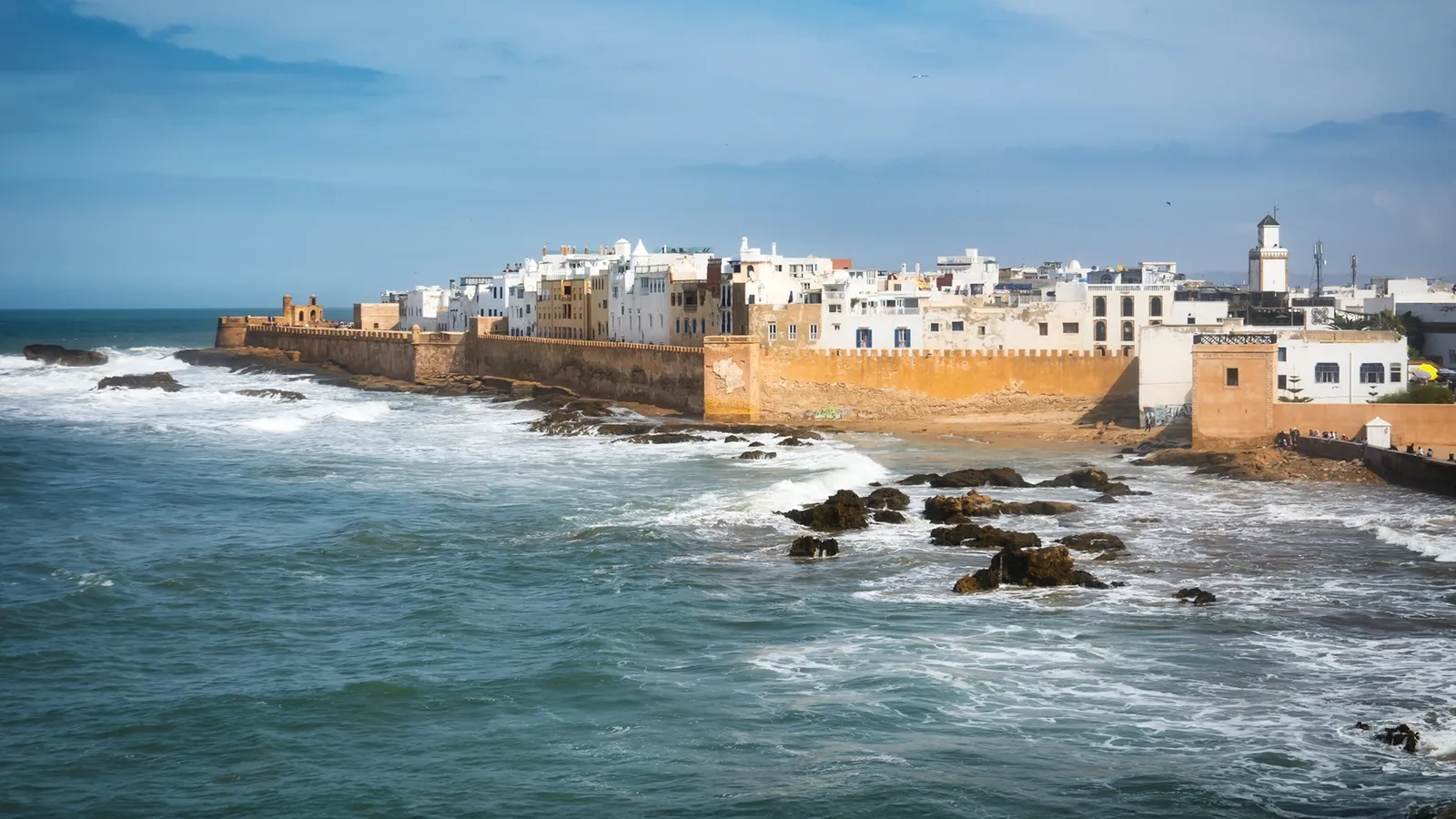
The Medina of Essaouira is one of the most fascinating historic cities in Morocco. Located on the Atlantic coast, it is known for its impressive stone walls, blue-and-white buildings, busy fishing port, narrow streets, traditional markets, and strong ocean winds. But Essaouira is much more than a beautiful destination. Its medina has a long history shaped by ancient traders, Moroccan rulers, European architects, Jewish merchants, African trade routes, and local Amazigh communities.
For centuries, the city was known as Mogador. Today, the old medina remains one of the best-preserved examples of a fortified port city in North Africa. Its history is especially interesting because Essaouira was designed as a meeting point between Morocco and the outside world.
In 2001, the Medina of Essaouira, formerly Mogador, was inscribed on the UNESCO World Heritage List because of its unique combination of European military architecture and traditional Moroccan urban design. UNESCO also recognizes its historic importance as an international trading port and a multicultural center.
Long before the modern city of Essaouira was built, the area was already connected to Mediterranean trade. The location was attractive because of its Atlantic coastline and its nearby islands, which offered strategic advantages to sailors and merchants.
According to UNESCO documentation, archaeological evidence shows that the area had connections with ancient Phoenician trading activity and was later visited by other Mediterranean civilizations, including Greeks and Romans. The historical name Mogador is commonly linked to the ancient word Migdol, meaning “small fortress.”
Although the modern Medina of Essaouira was built much later, these early connections demonstrate that the area had been important to trade and maritime activity for many centuries.
During the early 16th century, Portugal was expanding its influence along the Atlantic coast of Morocco. In 1506, the Portuguese established a fortress in the area of Mogador. However, the settlement did not remain under Portuguese control for long.
The Portuguese presence was relatively short compared with the long history that followed, but it showed the strategic importance of the Atlantic location. European powers understood that Morocco’s coastline could provide access to important trade routes and maritime connections. UNESCO's historical documentation records the 1506 Portuguese fortress and its later abandonment.
The city that visitors see today, however, is mainly the result of a much later project carried out by the Moroccan Alaouite dynasty in the 18th century.
The most important chapter in the history of Essaouira began during the reign of the Alaouite Sultan Sidi Mohammed Ben Abdallah, who ruled Morocco from 1757 to 1790.
The Sultan wanted to create a strong royal port on the Atlantic coast. His objective was to develop a major commercial center that would connect Morocco with Europe, sub-Saharan Africa, and other parts of the world. Essaouira was therefore planned as an important international gateway for Moroccan trade.
Unlike many older Moroccan medinas, which developed gradually over centuries, modern Essaouira was largely designed as a planned city. UNESCO describes it as a remarkable example of a fortified town created in the 18th century, combining European military principles with North African and Arabo-Muslim architecture and urban planning.
This planned approach explains why Essaouira’s medina looks different from cities such as Fes or Marrakech. Its streets are often wider and more organized, while its defensive walls and bastions give the city a distinctive appearance.
To help design the new city, the Moroccan authorities used European architectural knowledge. UNESCO notes that the medina was laid out by a French architect influenced by the work of the famous French military engineer Vauban and the principles of European defensive architecture.
The result was a unique city.
Essaouira was built with:
Strong defensive ramparts
Large stone walls
Bastions and fortified gates
A carefully organized urban plan
Important military and administrative areas
A port protected from potential attacks
At the same time, the city was not simply a European fortress. Moroccan architectural traditions, Islamic urban design, local building materials, and North African cultural influences remained central to its identity.
This combination is one of the main reasons why the Medina of Essaouira is historically unique. It represents an encounter between different architectural traditions rather than a simple copy of a European city.
The powerful walls surrounding the Medina of Essaouira are among its most famous landmarks. Built to protect the city and its important commercial activities, the fortifications remain an important symbol of Essaouira today.
Visitors can still walk along sections of the historic ramparts and admire the cannons facing the Atlantic Ocean. The fortifications demonstrate the importance of the city as both a commercial and strategic port.
Among the best-known defensive areas are the Sqala of the Medina and the Sqala of the Port. These areas were designed to protect the city while also creating impressive viewpoints over the Atlantic coast.
UNESCO identifies Essaouira as an exceptional example of a fortified seaport where European military architecture was adapted to a North African environment. Much of the city's historic configuration, including its fortifications and urban fabric, has survived.
Trade was the main reason for the creation and development of modern Essaouira.
The city became an important connection between Morocco, Europe, and the African interior. Merchants brought products through trans-Saharan routes toward the Atlantic coast, while ships carried Moroccan and African goods to international markets.
Essaouira became so important to trans-Saharan commerce that it was known for a long period as the “Port of Timbuktu.” During the late 18th and 19th centuries, it developed into one of the major Atlantic commercial centers linking Africa and Europe.
The port helped transform Essaouira into a meeting place for merchants, travelers, sailors, diplomats, and communities from different parts of Morocco and beyond.
This international history can still be felt today. Although modern tourism has become an important part of the local economy, the historic fishing port continues to remind visitors of the city’s long relationship with the sea.
One of the most important aspects of Essaouira’s history is the role played by its Jewish community.
Jewish merchants became highly important to the commercial development of the city. Their international business networks helped connect Essaouira with markets inside and outside Morocco.
The historic Jewish quarter, known as the Mellah, became an important part of the medina. The district included homes, religious buildings, businesses, and commercial spaces.
Essaouira developed as a multicultural city where Amazigh, Arab, African, European, Muslim, Jewish, and Christian communities interacted. UNESCO specifically recognizes this multicultural character as an important part of the city's heritage and identity.
Today, visitors can still explore parts of the historic Mellah and discover the important role that Jewish culture played in the history of Essaouira.
From its foundation, Essaouira was different from many other cities because diversity was an important part of its development.
The city attracted people from different regions and backgrounds. These included:
Amazigh communities
Arabs
Jewish merchants
African traders
European merchants and diplomats
Muslim, Jewish, and Christian communities
This mixture created a distinctive cultural identity. The city became a place where languages, traditions, religions, music, food, architecture, and trade networks came together.
Essaouira's multicultural past is not simply a distant memory. It remains an important part of the city's modern identity and contributes to its special atmosphere.
During the 19th and 20th centuries, changes in international trade and the development of other Moroccan ports reduced Essaouira’s commercial importance.
The city was no longer the dominant international trading center it had once been. Major economic activities gradually moved toward larger cities and ports.
However, this relative decline also helped preserve the historic character of the medina. While other cities experienced rapid modernization and major redevelopment, many parts of Essaouira retained their historic streets, walls, buildings, and urban structure.
Over time, Essaouira developed new forms of economic activity, including fishing, crafts, music, culture, and tourism.
Today, the Medina of Essaouira is one of Morocco’s most popular historic destinations.
Visitors can walk through the old streets, explore traditional shops, visit art galleries, enjoy seafood near the port, discover historic gates, and walk along the Atlantic ramparts.
The medina is especially attractive because it remains a living city. It is not simply an open-air museum. Local residents continue to live and work inside the historic area, while traditional markets and businesses remain part of everyday life.
The medina was inscribed on the UNESCO World Heritage List in 2001 under cultural criteria related to the interchange of architectural influences and its importance as an example of a fortified seaport town.
The Sqala of the Medina is one of the best places to understand Essaouira’s military history. Its walls, cannons, and ocean views demonstrate the importance of the city's defensive architecture.
Located near the fishing harbor, the Sqala of the Port is another important example of the city's historic fortifications.
The Mellah offers visitors an opportunity to discover the Jewish history of Essaouira and the important role of Jewish communities in the development of the city.
This historic gate is part of the old fortified entrance system of the medina and reflects the planned character of the city.
The port remains one of the most active and authentic areas of Essaouira. Although its role has changed since the great commercial period of Mogador, it continues the city’s long maritime tradition.
Simply walking through the streets is one of the best ways to experience the history of Essaouira. The organized layout, stone buildings, gates, markets, and traditional workshops reflect centuries of urban and commercial life.
Morocco has many beautiful historic medinas, including those of Fes, Marrakech, Tetouan, and Meknes. However, Essaouira is different.
Many traditional Moroccan medinas developed organically over long periods. Essaouira, by contrast, was largely created as a planned royal port in the 18th century.
Its architecture combines:
European military planning
Moroccan building traditions
Islamic urban design
Atlantic maritime architecture
Local stone and construction techniques
This gives the city a distinctive appearance. Visitors can feel the difference immediately when walking through its streets.
UNESCO considers this blend of European and North African influences to be one of the central characteristics of the site.
Historic cities face many challenges. Old buildings require expensive maintenance, while tourism and modern development can place additional pressure on historic areas.
UNESCO has identified issues affecting the historic property, including commercial development, housing, governance, and concerns related to rehabilitation in the Mellah quarter. At the same time, the city continues to benefit from conservation and management efforts aimed at protecting its historic character.
Preserving the Medina of Essaouira is important not only for tourism but also for Moroccan history and cultural identity. The city tells the story of Morocco's connections with Africa, Europe, the Atlantic world, and different cultural communities.
The history of Essaouira’s Medina is the story of a city created to connect Morocco with the world.
From the ancient history of Mogador to the Portuguese presence, from the ambitious project of Sultan Sidi Mohammed Ben Abdallah to the development of an international trading port, Essaouira has always been shaped by movement, exchange, and cultural diversity.
Its powerful ramparts, organized streets, historic Mellah, fishing port, and Atlantic views are reminders of a remarkable past.
Today, the Medina of Essaouira remains one of Morocco’s most unique historic destinations. A visit to its old streets is not only an opportunity to enjoy beautiful architecture and ocean views—it is also a journey through centuries of Moroccan, African, European, Jewish, Amazigh, and maritime history.
For travelers interested in culture, architecture, history, and authentic Moroccan experiences, exploring Essaouira’s medina is an unforgettable way to discover the story of former Mogador and one of Morocco’s most important Atlantic cities.
For further official background on the World Heritage Site, see UNESCO’s Medina of Essaouira page.

Comments