
+212772661260
info@triptikum.com
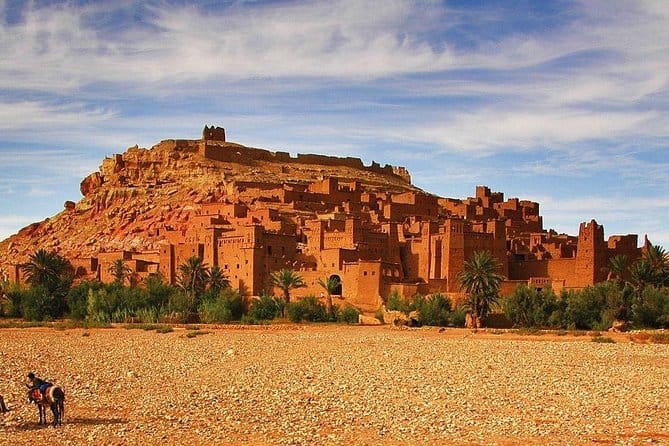
One of the most common questions travelers ask before visiting Morocco is whether they need to hire a guide when exploring Aït Benhaddou Kasbah.
The short answer is no. Most visitors can comfortably explore Aït Benhaddou without a guide. The paths are easy to follow, the village is relatively small, and there are plenty of signs and viewpoints to help you navigate.
However, while a guide is not necessary, there are situations where hiring one can greatly improve your experience.
This guide explains everything you should know before deciding.
Aït Benhaddou is one of Morocco's most famous historic villages. Located between Marrakech and the Sahara Desert near Ouarzazate, it has become one of the country's most photographed landmarks.
The village is a traditional ksar, meaning a fortified settlement built from mud bricks, clay, straw, and wood.
For centuries, caravans carrying gold, salt, spices, and textiles crossed southern Morocco and stopped here before continuing toward Marrakech.
Today, Aït Benhaddou is recognized as one of Morocco's greatest cultural treasures and is listed as a UNESCO World Heritage Site.
Although only a few families still live inside the ancient village, walking through its narrow streets feels like stepping back several hundred years.
Several reasons make this kasbah one of Morocco's most visited attractions.
Since 1987, UNESCO has protected Aït Benhaddou because of its outstanding traditional earthen architecture.
Its towers, walls, alleys, and granaries represent one of the best-preserved examples of southern Moroccan construction.
Many famous movies and television series have been filmed here, including:
Gladiator
Kingdom of Heaven
Prince of Persia
The Mummy
Game of Thrones
Babel
Movie fans often recognize many parts of the village immediately.
Absolutely.
Thousands of visitors explore Aït Benhaddou every day without hiring a guide.
Unlike some large medinas where streets can become confusing, the kasbah is quite easy to navigate.
Most visitors simply:
Cross the bridge or stepping stones.
Enter through the main gate.
Wander through the old streets.
Visit small artisan shops.
Climb to the hilltop granary.
Enjoy panoramic views.
Return the same way.
The entire visit usually takes between one and three hours depending on your pace.
Many travelers actually prefer exploring independently.
You decide where to stop, how long to stay, and which areas interest you most.
Photographers especially appreciate taking their time without feeling rushed.
Hiring a guide is optional.
If you're traveling on a budget, exploring independently costs nothing beyond any applicable entrance fees to specific attractions or museums.
Without a guide, you can simply enjoy the atmosphere, admire the architecture, and appreciate the silence of the ancient streets.
Although not essential, a knowledgeable local guide can add value.
Without explanations, many buildings may appear similar.
A guide can explain:
Why the houses were built this way.
How families lived.
Caravan trade history.
Defensive architecture.
Daily life centuries ago.
Guides often point out:
Decorative symbols.
Ancient storage rooms.
Community ovens.
Water systems.
Historic gathering places.
These details are easy to miss on your own.
Local guides know the best viewpoints and the best times of day for photos.
Not really.
The kasbah has a limited number of streets, and most paths eventually lead either to the entrance or to the hilltop viewpoint.
If you continue walking uphill, you'll eventually reach the highest point overlooking the valley.
Like many popular tourist sites around the world, visitors may occasionally be approached by people offering guiding services.
Most are friendly, but it is always wise to know exactly what you are agreeing to before beginning a tour.
If you decide to hire someone:
Agree on the price first.
Confirm whether the guide is licensed.
Ask how long the tour lasts.
Clarify what is included.
If you prefer to explore alone, simply smile and politely say:
"No thank you."
Most people will respect your decision.
Morning is generally the best time.
Benefits include:
Cooler temperatures.
Softer light.
Fewer visitors.
Better photography.
Late afternoon is also beautiful, especially when the mud-brick buildings glow in the warm sunlight.
Midday during summer can be very hot.
Most visitors stay:
Quick visit: 1 hour
Comfortable visit: 2 hours
Photography lovers: 3 hours
History enthusiasts: Half a day
Comfortable walking shoes are highly recommended.
The streets include:
Uneven stones
Dirt paths
Small staircases
Steep sections
Bring:
Water
Sunscreen
Hat
Sunglasses
Camera
Yes.
Children usually enjoy climbing the streets and exploring the old village.
Parents should supervise younger children near steep paths and viewpoints.
Many older travelers visit successfully.
However, reaching the top involves climbing uphill.
Those with mobility limitations can still enjoy wonderful views from the lower sections.
Yes.
Many travelers visit Aït Benhaddou during:
Marrakech to Ouarzazate day trips
Marrakech to Merzouga desert tours
Multi-day southern Morocco itineraries
It is one of the most popular stops on these routes.
For the best photos:
Climb to the top viewpoint.
Cross the river for panoramic shots.
Stay until golden hour if possible.
Use wide-angle lenses.
The contrast between the red earth and blue sky creates stunning images.
Inside the kasbah you'll find small family-run shops selling:
Berber carpets
Pottery
Handmade jewelry
Paintings
Leather products
Scarves
Buying directly from local artisans helps support the community.
Although Aït Benhaddou welcomes visitors from around the world, remember that it is still a living heritage site.
Be respectful by:
Asking permission before photographing people.
Avoiding climbing on fragile walls.
Keeping the village clean.
Supporting local businesses when possible.
Responsible tourism helps preserve this remarkable place for future generations.
No.
Yes. Most visitors do.
Yes. Aït Benhaddou is considered one of Morocco's safest tourist attractions. As with any destination, keep an eye on your belongings and stay aware of your surroundings.
Around two hours is ideal for most visitors including lunch time

Comments