
+212772661260
info@triptikum.com
The Sahara Desert around Merzouga and Erg Chebbi may look like a vast landscape of sand and dunes, but it is home to a surprising variety of animals. From reptiles that disappear beneath the sand to desert foxes and birds, wildlife has developed remarkable ways to survive in one of the world's harshest environments.
The animals of Merzouga are specially adapted to high temperatures, limited water and the changing conditions of the desert. Some are active at night, while others spend much of their time hidden under the sand.
Here are some of the animals that can be found in the Merzouga region and the surrounding Sahara.
The sandfish, scientifically known as Scincus scincus, is one of the most fascinating reptiles of the Sahara around Merzouga.
Despite its name, the sandfish is actually a lizard. It gets its name from the way it moves through loose sand, almost like a fish swimming through water.
Its body is smooth and adapted for moving beneath the surface of the sand. It has a pointed head, short limbs and a streamlined body that allows it to "swim" through the dunes.
The sandfish can bury itself very quickly to escape predators, extreme heat and other dangers. It can spend much of its time beneath the surface, which is why visitors may never notice it even when walking through its habitat.
The species is especially interesting because it demonstrates how reptiles can adapt to life in sandy desert environments.
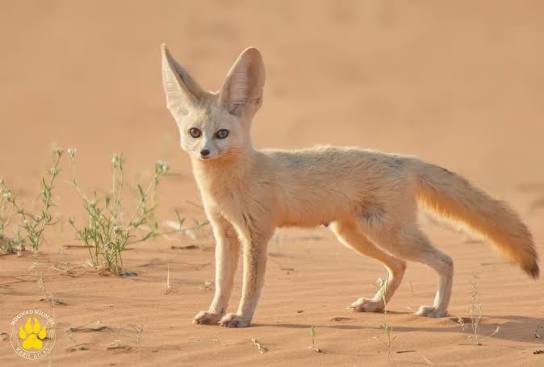
The fennec fox is one of the most famous animals of the Sahara Desert.
It is a small fox recognized by its exceptionally large ears. These ears help the animal release heat and detect sounds in its surroundings.
The fennec fox is mainly nocturnal. During the hottest part of the day, it usually stays in its underground burrow, where temperatures are more comfortable.
Its pale sandy-colored coat also helps it blend into the desert landscape.
Because it is small, nocturnal and well camouflaged, seeing a wild fennec fox around Merzouga is not easy.
Other desert-adapted foxes can also occur in the wider Sahara region around southeastern Morocco.
These animals are generally more active during the cooler hours of the day and at night. Their diet can include small mammals, insects, reptiles and other available food.
Their ability to survive with limited water makes them well suited to the desert environment.
The dromedary camel is perhaps the most recognizable large animal of the Moroccan Sahara.
Unlike the two-humped Bactrian camel, the dromedary has a single hump.
Camels are exceptionally adapted to desert conditions. Their wide feet help them walk across soft sand, while their bodies are adapted to high temperatures and periods with little available water.
The camel has been an important animal for communities living in desert regions for centuries.
The desert hedgehog is another small mammal associated with the arid regions of Morocco.
It is mainly active at night and spends the hotter hours hiding from the desert sun.
Its spiny body provides protection from predators, while its nocturnal behavior helps it avoid extreme daytime temperatures.
Because of its nighttime activity and small size, it is not commonly seen by visitors during the day.
The sandy and rocky areas around Merzouga provide habitat for several types of desert lizards.
These reptiles are adapted to high temperatures and limited water. Their colors can also provide excellent camouflage against sand and rocks.
Some lizards quickly disappear beneath the sand when disturbed, while others hide between rocks or vegetation.
The sandfish is one of the most specialized examples because of its ability to move beneath loose sand.
Several species of snakes live in Morocco's desert regions.
Desert snakes have adaptations that allow them to survive in hot and dry environments. Some species are primarily nocturnal or become more active during cooler periods.
Snakes are generally difficult to see because they spend much of their time hidden.
Their presence is an important part of the Sahara ecosystem because they help control populations of rodents, lizards and other small animals.
The Merzouga region is also home to a variety of birds adapted to desert conditions.
Birds can be found around sandy dunes, rocky desert areas, palm groves and seasonal wetlands.
Some species are resident in the region, while others visit the area during migration.
The seasonal Dayet Srji near Merzouga can become an important habitat for birds when water is present.
Among the most spectacular birds that may be seen there are greater flamingos.
The presence and number of flamingos depend heavily on water levels and seasonal conditions.
When the lake has sufficient water, it can attract a variety of migratory and water-associated birds, creating an unusual contrast between the desert dunes and a temporary wetland.
Small birds such as desert sparrows can survive in the harsh environment of southeastern Morocco.
They are adapted to dry conditions and can make use of the limited food and water resources available around desert settlements, palm groves and other suitable habitats.
Their small size and coloring can make them difficult to notice.
Birds of prey, including falcons, are also associated with the desert environment of southeastern Morocco.
Falcons are skilled hunters and can prey on smaller birds, reptiles and mammals.
Seeing a falcon flying over the dunes is a reminder that the Sahara supports a complete food chain, from insects and small reptiles to larger predators.
The Egyptian nightjar is a fascinating desert bird because of its nocturnal lifestyle.
It is specially adapted to dry environments and is difficult to spot because its natural coloring provides excellent camouflage.
During the day, it can remain almost invisible against the desert ground.
At night, it becomes active and feeds mainly on insects.
Although they are small, insects are an important part of the Sahara ecosystem.
Beetles, ants, grasshoppers and other insects have developed different strategies for surviving extreme heat and limited water.
They also provide an important food source for reptiles, birds and small mammals.
Some insects are active mainly at night or during the cooler parts of the day.
Scorpions are among the best-known creatures associated with desert environments.
They are adapted to survive with very little water and are mainly active during cooler periods, particularly at night.
Scorpions spend much of their time hiding beneath rocks, in small shelters or beneath the sand.
They are predators and feed on insects, spiders and other small animals.
Spiders are another important part of the desert ecosystem.
Different species live in sandy and rocky habitats around the Sahara. Some hunt insects directly, while others use webs or shelters.
Like many other desert animals, they are often more active when temperatures are lower.
The animals of Merzouga have developed remarkable adaptations to survive desert conditions.
Some, like the sandfish, can move beneath the sand.
Others, such as the fennec fox, are mainly active at night.
Many animals avoid the hottest part of the day by hiding in burrows, beneath rocks or underground.
Their colors also help them blend into the sandy and rocky landscape.
These adaptations allow wildlife to survive despite extreme temperatures and limited water.
The dunes of Erg Chebbi may appear empty at first glance, but the sand contains a hidden world of life.
Tracks in the sand can reveal the movement of reptiles, insects and small mammals. A quick movement beneath the surface may indicate a lizard such as the sandfish. At night, foxes, hedgehogs, scorpions and other animals become more active.
The wildlife of Merzouga is therefore not always easy to see. Much of it is hidden, nocturnal or perfectly camouflaged.
This is what makes the Sahara such a fascinating ecosystem.
The Sahara around Merzouga and Erg Chebbi is home to much more wildlife than its dry appearance suggests.
The sandfish (Scincus scincus), fennec fox, desert fox, dromedary camel, hedgehog, lizards, snakes, scorpions and numerous birds are all part of the remarkable desert ecosystem.
Some animals are easy to recognize, while others spend most of their lives hidden beneath the sand or active during the night.
The sandfish is perhaps one of the best examples of Sahara adaptation: this small lizard can "swim" through the sand, disappearing beneath the surface within seconds.
The animals of Merzouga show that the Sahara is not an empty desert. It is a living ecosystem filled with species that have evolved extraordinary ways to survive.

Comments